


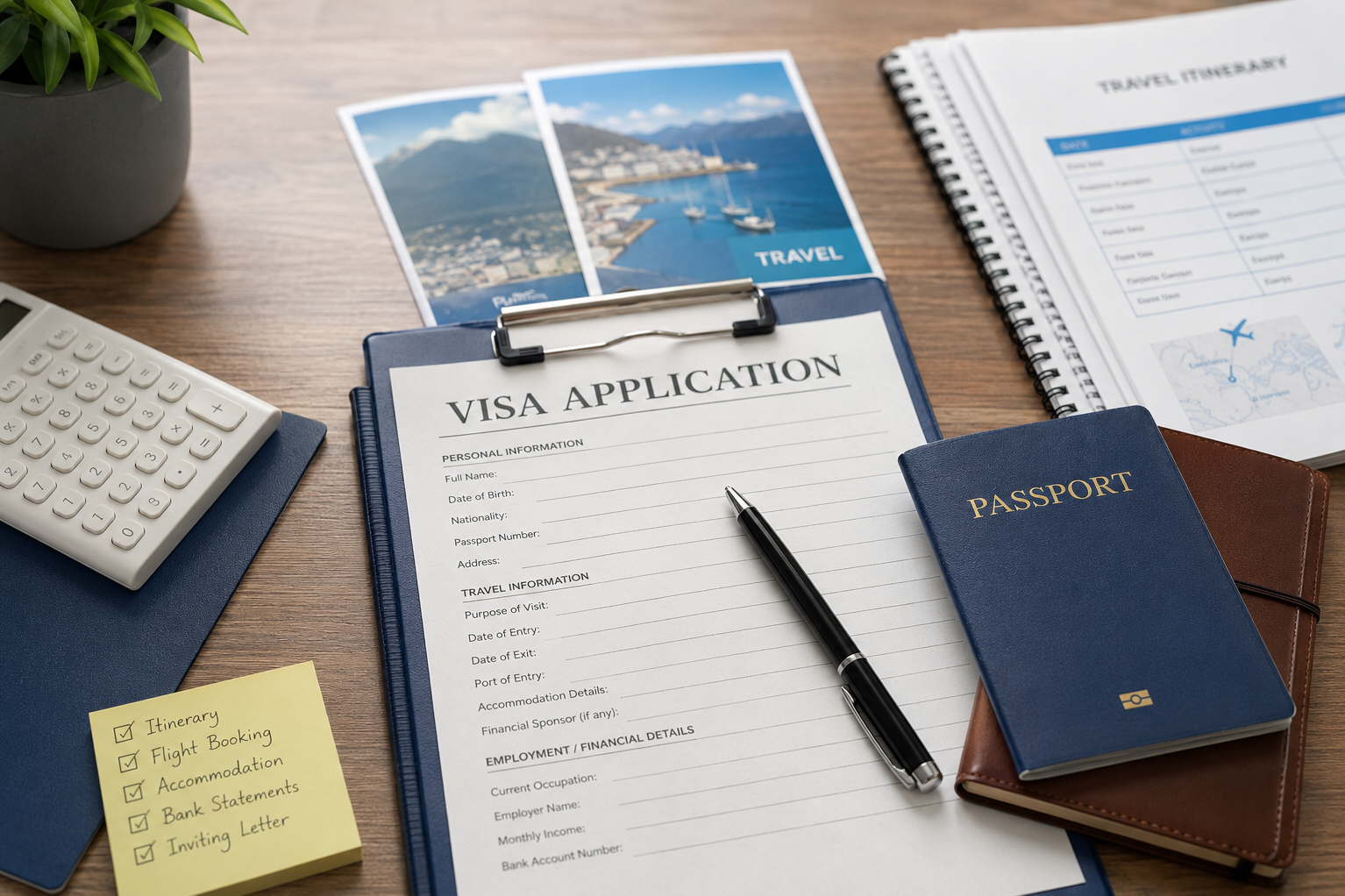
A tourist or visitor visa application may appear straightforward, but approval is not based solely on having enough money for a trip. The applicant must show a credible purpose, sufficient financial resources and a realistic intention to leave the destination after the authorised visit.
Visa 4 Sure Immigration Consultancy Pvt reviews visitor visa applications for travellers in Chandigarh who plan to visit family, attend events or take short holidays abroad. The following mistakes frequently weaken otherwise reasonable applications.
1. Providing a Vague Purpose of Travel
Statements such as “tourism” or “visiting family” offer very little context. The application should explain where the applicant plans to stay, who they will meet, how long the trip will last and who will pay the expenses.
A practical itinerary may include:
- Proposed travel dates
- Cities to be visited
- Accommodation arrangements
- Family or event details
- Estimated expenses
- Planned return date
Avoid submitting unrealistic day-by-day plans created only to make the file look detailed.
2. Depending Entirely on an Invitation Letter
An invitation from a relative or friend can support the purpose of travel, but it does not guarantee a visa. The applicant must still satisfy the requirements independently.
The invitation should be consistent with the applicant’s forms, travel dates, relationship evidence and financial arrangements. If the host will pay some expenses, the respective responsibilities should be clearly explained.
3. Showing Funds Without Explaining Their Source
A large closing balance does not necessarily establish financial stability. Sudden deposits, borrowed money and unexplained transactions can create concerns.
Applicants should use records that show regular income and genuine access to funds, such as:
- Salary statements
- Income-tax returns
- Business records
- Pension statements
- Savings history
- Fixed deposits
- Sponsor documents
The budget should also be proportionate to the duration and nature of the trip.
4. Ignoring Home-Country Ties
Visitor visa decisions often consider whether the applicant has reasons to return home. Chandigarh applicants may demonstrate professional, financial, family or social commitments in India.
Relevant evidence can include ongoing employment, a functioning business, dependent family members, property, continued education or other responsibilities. Every document should relate to the applicant’s real circumstances.
5. Hiding Previous Refusals
Previous visa refusals should be disclosed whenever the application asks for them. Attempting to hide a refusal can create a more serious credibility problem than the refusal itself.
The new application should identify what has changed. Submitting the same documents again without addressing the earlier concerns may produce the same outcome.
6. Using Inconsistent Information
Employment dates, addresses, marital status, family details and travel history should match across all forms and evidence. Applicants should not change facts simply because they believe a different answer will appear more favourable.
Review spellings, dates and passport details carefully before submission.
7. Treating Visa Validity as Guaranteed Stay
A visitor visa allows a person to travel to a port of entry and request admission. It does not guarantee entry or automatically permit a stay for the full visa-validity period.
For Canada, most visitors are commonly allowed to stay for up to six months, but a border officer may authorise a shorter or longer period. Travellers must respect the conditions given upon entry.
A strong tourist and visitor visa application combines a clear purpose, believable finances and convincing reasons to return. Applicants can have their documents professionally reviewed before filing to identify gaps that may otherwise go unnoticed.