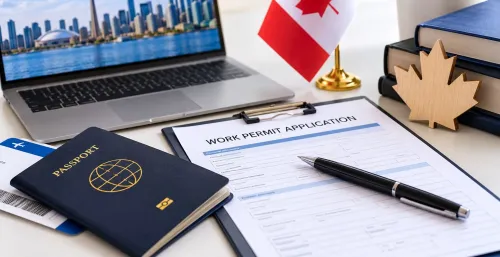

A marriage certificate is only one part of a spouse visa application. You must choose the correct immigration route, prove that the relationship is genuine, satisfy sponsorship and admission rules, and submit documents in the format the destination authority accepts. By the end, you will have a country-specific checklist and a practical order for preparing the application.
Key takeaways
- Match the route to the sponsor’s status, location and settlement goal.
- Include identity, relationship, financial and status documents in one controlled file.
- Use dated messages, travel records and shared finances to evidence a genuine relationship.
- Check translation, certification, validity and country-specific filing rules before submission.
Which spouse or partner visa route applies to your situation?
The correct route depends on the sponsor’s immigration status, your location, your legal relationship and the outcome you want: temporary entry, permanent residence or settlement. “Spouse visa” is not a universal category; countries define spouse visa routes differently.
| Route | What it means | When it applies |
|---|---|---|
| UK family visa | A family visa for a spouse or qualifying partner | The sponsor meets UK rules and the applicant seeks residence with them |
| US immigrant spouse route | The petitioner begins with Form I-130 | A qualifying spouse seeks an immigrant visa abroad or adjustment of status in the United States |
| Canada family-class sponsorship | The sponsor submits a family-class spousal sponsorship application | A Canadian citizen or permanent resident sponsors a legally valid spouse |
| Australia partner pathway | Temporary subclass 309 leads to permanent subclass 100 offshore; subclass 820 leads to subclass 801 onshore | The applicant’s location determines the starting visa |
| Fiancé(e) visa | Permission to enter and marry the sponsor | The couple is not yet married and plans to marry after entry |
A partner visa may cover a de facto, common-law or unmarried relationship under country-specific rules; it is not automatically equivalent to a spouse category. A dependent visa normally covers an eligible dependant attached to another visa holder, while a family reunification visa brings qualifying family members together under that country’s programme.
A spouse route requires a marriage that the destination country recognises as legally valid. A fiancé(e) route is different: you enter to marry, then apply under the applicable spouse or partner system. Check the rules for both offshore and onshore applicants before filing.
Who qualifies as a sponsor and an applicant?
1. Start with sponsor eligibility: confirm citizenship, permanent residence, or a temporary-status document, the destination’s minimum age, and whether the sponsor must live there. Check whether the applicant applies from inside or outside the country; location can change the form and route.
2. Prove a legally valid marriage under local law, supported by civil registration where required. “Partner” is not interchangeable with “spouse”: common-law or de facto relationships need the destination’s prescribed evidence and qualifying period. A religious or informal ceremony may not qualify.
3. Apply the country’s financial rules before collecting documents. The UK spouse visa financial requirement £29,000 usually applies to applications from 11 April 2024; relying only on savings requires £88,500. The first application needs A1 English, while an extension needs A2 English requirement.
The UK five-year partner route requires five continuous years on that route before settlement. In the US, the sponsor files an Affidavit of Support showing 125% Federal Poverty Guidelines, or 100% for an eligible active-duty military sponsor; residence is conditional for two years when the marriage is under two years old at admission.
4. Canada spousal sponsorship usually has no minimum income test, subject to sponsor eligibility and Quebec rules. Australia Partner visa subclass 309 is the temporary offshore stage before subclass 100 permanent residence; onshore applicants use subclass 820 before 801. Confirm each stage’s requirements before filing.
What documents belong in a complete spouse visa file?
1. Identity: Include current passports, previous passports, birth certificates, proof of address and recent photographs. Check that names, dates of birth and passport numbers match across every record.
2. Civil status: Add the marriage certificate and any divorce decree or death certificate from a previous marriage. A marriage certificate proves the legal marriage, not that the relationship is genuine; include separate relationship evidence where requested.
3. Sponsorship: Provide the sponsor’s citizenship, permanent-residence or immigration-status documents, plus proof of address and destination authority forms. Add the fee receipt and biometrics instructions.
4. Finances: Prepare tax records or tax returns, payslips, bank statements and an employment letter. Financial evidence differs by country and route, so follow the exact income, savings or sponsorship rules for your application.
5. Health and character: Include the required medical examination results and a police clearance certificate from each country requested. Do not assume an old certificate remains valid.
6. India-issued records: For Punjabi documents or another non-English document, obtain a certified translation, keep the original beside it, and follow the authority’s rule on translator certification, notarisation and apostille. India documents accepted by one country may fail another country’s standard. The same warning applies to a translation, apostille or notary stamp.
Use this spouse visa document checklist beside the destination authority’s current upload list; missing file limits, forms or instructions can delay processing.
How do you prove a genuine relationship and handle unusual marriages?
1. Build genuine relationship evidence as a dated story, not a pile of screenshots. Start with when you met, key visits, engagement, wedding and current life together, then support each stage with communication records, call logs, travel history, passport entry stamps, photographs showing dates and locations, wedding invitations and receipts.
2. Add ordinary-life proof: joint finances, joint bank accounts or bills, shared accommodation, household responsibilities, insurance or beneficiary records, and family statements from relatives or friends who know the relationship. Explain periods of separation, different addresses, language barriers or limited travel instead of leaving gaps for an officer to interpret.
3. Confirm that the legal marriage was valid where it was performed and is recognised by the destination country. A proxy marriage, online wedding or religious marriage without civil registration receives extra scrutiny; check whether the authority accepts it.
A second marriage requires evidence that earlier marriages ended, including a final divorce decree or dissolution document.
4. Treat a common-law relationship under the destination’s exact definition, which may require proof of a minimum cohabitation period. Avoid excessive, repetitive or staged evidence: choose representative records, identify dates and people, and provide context rather than identical conversations or posed photographs. A marriage certificate proves the ceremony, not automatically a genuine relationship.
What is the correct application sequence and file-control routine?
Follow this spouse visa application process in order:
- Confirm the correct route and the destination authority’s current document checklist.
- Create the authority’s online account using the applicant’s details.
- Complete the correct visa application form, checking every answer against the supporting documents.
- Pay the government fee and save the payment receipt.
- Upload each required file through the portal.
- Book or provide biometrics as instructed.
- Attend the medical examination only when the authority requires it, using an approved clinic where specified.
- Answer every request for further evidence by its deadline.
- Attend an interview or consular appointment if required.
- Complete passport submission only after the authority requests it.
Scan every page in colour when required. Clear scan quality matters: text, signatures and stamps must remain readable. Follow the portal’s accepted file type, file size and page limit. Use consistent document naming, such as ApplicantName_MarriageCertificate_2024.pdf.
Check expiry dates for passports, police certificates and medical results before uploading. Retain copies of every upload, completed form, payment receipt, appointment confirmation and application receipt number. Specifications vary by country and portal, so the authority’s current upload instructions control.
When should you get a country-specific document review?
A second review is sensible when the sponsor has mixed citizenship and residence status, the couple lives in different countries, or the applicant is already in the destination country.
Get country-specific spouse visa advice before submission if the marriage was online or religious, the applicant has a previous divorce, the sponsor relies on savings or a joint sponsor, or records are in Punjabi or another non-English language.
| Destination | Route issue | Consequence of choosing incorrectly |
|---|---|---|
| US | Consular processing or adjustment of status | An applicant inside the US may need adjustment of status rather than consular processing. |
| Canada | Canada sponsorship undertaking: three years; Quebec has extra rules | The undertaking continues after separation or divorce, including repayment of social assistance. |
| Australia | Temporary and permanent partner stages | The permanent partner visa requires a separate assessment after the temporary stage. |
| UK | UK settlement: five-year partner route | Time outside the qualifying partner route may not count toward settlement. |
Visa 4 Sure Immigration Consultancy Pvt Ltd can help a Chandigarh applicant with a document review, checklist, and missing translations or evidence; published government rules remain controlling.
Related product
Domestic and International abc View product → |
Frequently asked questions
Which spouse or partner visa route applies to my situation?
Choose the route based on the sponsor’s immigration status, your current location, your legal relationship and whether you seek temporary entry, permanent residence or settlement.
Who qualifies as a sponsor and an applicant?
The sponsor is the person whose citizenship or immigration status supports the application. The applicant is the spouse or partner seeking entry, residence or settlement under that route.
What documents belong in a complete spouse visa file?
A complete file usually contains passports, marriage or civil-partnership evidence, sponsor-status documents, financial records, accommodation evidence, relationship proof, required forms and certified translations.
How do you prove a genuine relationship and handle unusual marriages?
Use dated evidence such as messages, call logs, travel records, photographs, shared finances and correspondence. Explain unusual timelines, previous marriages, long-distance periods or limited cohabitation with clear supporting documents.
What is the correct application sequence and file-control routine?
Confirm eligibility first, collect and check documents, complete the correct forms, arrange translations and certifications, pay the required fees, submit through the designated channel and retain an indexed copy of everything.